
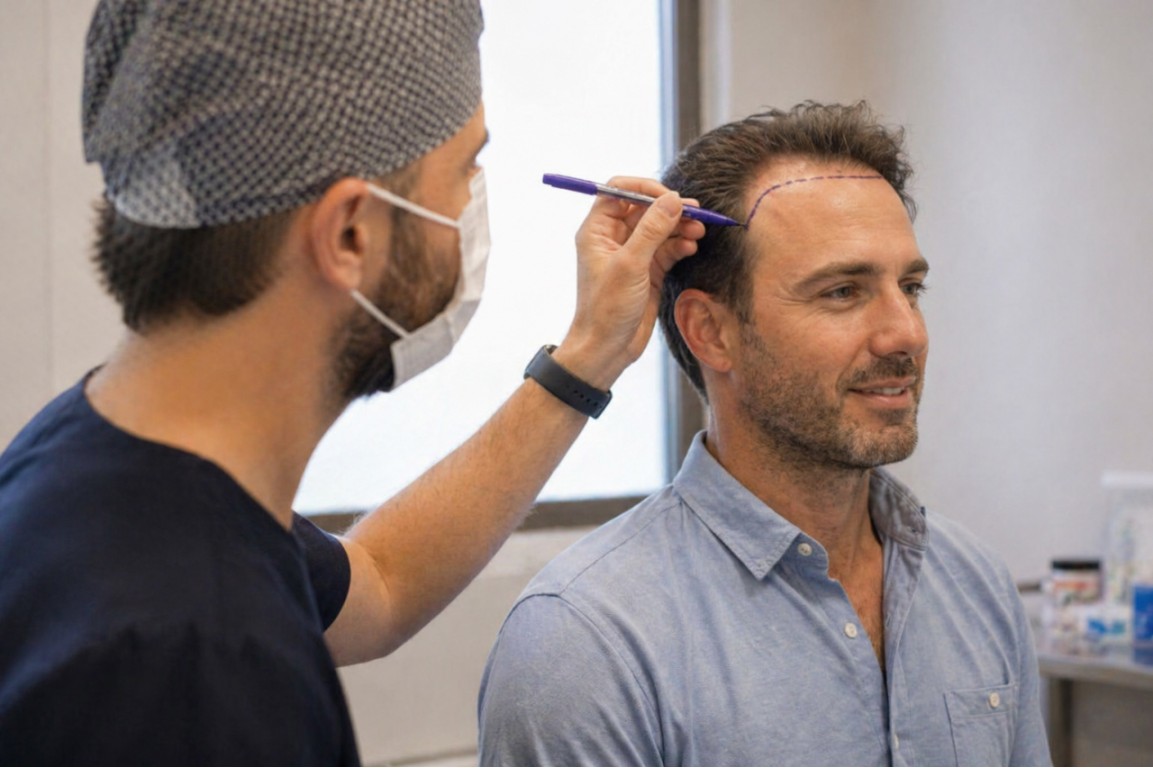
Hair transplant recovery: aftercare, healing and what to expect
A hair transplant is a medical procedure with a generally smooth recovery. Still, the first days are important to protect the transplanted grafts and support the best possible outcome.
In this guide, you’ll find what is normal after a hair transplant, how to care for your scalp, and what to avoid during the first weeks.
Quick recovery timeline after a hair transplant
- First 3 days: protect the grafts
- First week: avoid friction and intense activity
- Day 7–10: scabs start to fall off
- Weeks 2–8: shedding phase (normal)
- 3–4 months: new hair starts growing
- 10–18 months: final result
First days after a hair transplant: what to do and what to avoid
During the first 48–72 hours, the grafts are still delicate.
You should:
- Avoid touching, scratching or rubbing the treated area
- Sleep with your head elevated (using extra pillows or a neck pillow)
- Avoid exercise, alcohol and smoking
- Avoid bending your head forward
You may notice:
- Mild discomfort or tightness
- Small spots of bleeding
- Swelling on the forehead
👉 These are normal and usually improve within a few days.
Washing your hair after a hair transplant
The first wash is usually done 2–3 days after the procedure, following your doctor’s instructions.
Basic recommendations:
- Use a mild shampoo
- Apply foam gently without rubbing
- Rinse with lukewarm water, avoiding direct pressure
- Let the hair air dry or pat dry carefully
During the first days, do not massage the transplanted area or use hot air from a hairdryer.
First week after a hair transplant: care and progress
In this phase, the grafts are still stabilizing.
It’s recommended to:
- Continue gentle washing
- Avoid tight hats, helmets or friction
- Keep physical activity light
Some swelling on the forehead may appear between day 2 and 5 and usually resolves on its own.
Days 7–10: scabs fall off and grafts become more stable
After the first week:
- Grafts are more secure
- Washing can be slightly more active
- Scabs begin to fall off naturally
👉 Do not pick or remove them manually.
In some cases, topical minoxidil can be restarted once the area has healed, if your doctor recommends it.
Is it normal to lose the transplanted hair?
Yes. Between weeks 2 and 8, the transplanted hair often sheds.
👉 This is completely normal and does not mean the transplant has failed.
It is part of the natural hair cycle before new growth begins.
When will I see results after a hair transplant?
Hair growth takes time.
- Around 3–4 months: new hair starts growing
- 6–9 months: visible improvement
- 10–18 months: final result
The process is gradual and requires patience.
When can I exercise after a hair transplant?
You should avoid:
- Gym workouts
- Running
- Weight lifting
- Contact sports
General guidance:
- Light activity: after a few days
- Intense exercise: after 3–4 weeks
Always return gradually.
When can I wear a hat or helmet?
During the first days, avoid any pressure or friction on the treated area.
- Tight hats: avoid for 7–10 days
- After that: only loose and clean caps
- Helmets: wait until your doctor approves
When can I get a haircut?
- Donor area: can be trimmed earlier
- Recipient area: avoid scissors or clippers until fully healed
👉 Always follow your doctor’s advice.
First month after a hair transplant
During this period:
- Avoid intense exercise and heavy sweating
- Avoid direct sun exposure
- Do not use harsh products or hair dyes
You may notice:
- Mild redness
- Dryness of the scalp
- Shedding of transplanted hair
Warning signs after a hair transplant
You should seek medical advice if you notice:
- Increasing pain over time
- Significant redness or discharge
- Fever
- Persistent bleeding
These situations are uncommon but should be evaluated.
The key to a good recovery
A good result after a hair transplant depends not only on the technique, but also on proper aftercare.
If you are considering a hair transplant or would like a personalized medical evaluation, I can help you find the best approach for your case.
👉 If you’re considering a hair transplant, you can find more information here